Whey Protein vs. Plant-Based Protein: Which One is Right for You?
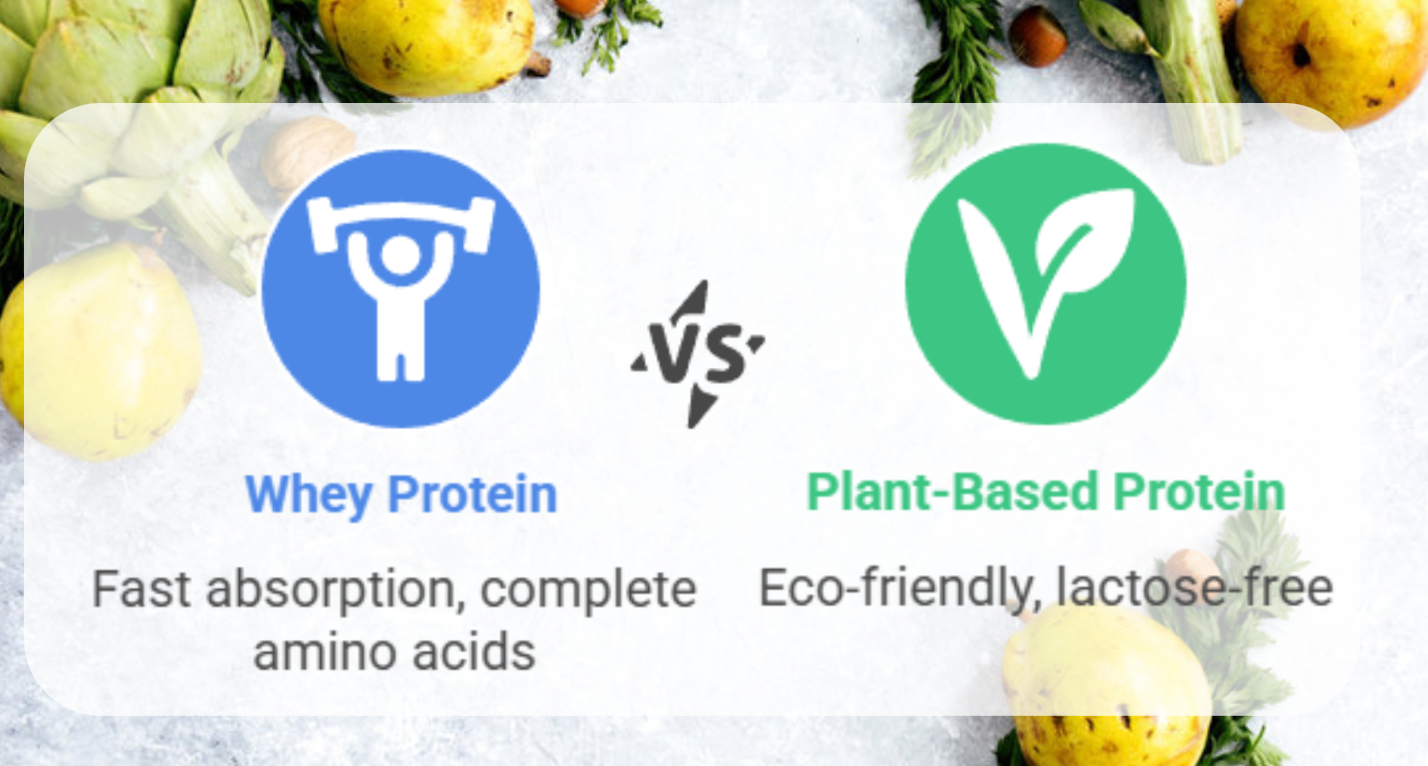
Protein is essential for muscle growth, repair, and overall health. With more people switching to plant-based diets, the debate between whey and plant-based protein is heating up. Let’s take a quick look at the differences, similarities, and which might suit your needs better.
What Are They?
Whey Protein: Comes from milk, made during cheese production.
Plant-Based Protein: Made from sources like peas, soy, rice, or hemp.
Nutritional Differences
Whey is a complete protein, meaning it contains all 9 essential amino acids. It’s also easy to digest and great for muscle recovery.
Plant Protein can also be high in protein, but some types may lack one or two amino acids unless blended. However, many blends now offer complete profiles too.
Digestibility & Allergies
Whey is fast-absorbing but may cause problems for those with lactose intolerance or dairy allergies.
Plant Protein is easier on the stomach, dairy-free, and often gluten-free—great for people with sensitivities.
Environmental Impact
If sustainability is important to you, plant-based protein has a clear advantage. Producing plant protein uses fewer natural resources and generates fewer greenhouse gas emissions than dairy-based whey protein.
Which One Should You Choose?
Choose whey if you want fast muscle recovery and don’t have dairy issues.
Go with plant-based if you prefer a dairy-free, eco-friendly option or follow a vegan lifestyle.
Both whey and plant-based proteins have their benefits. The best choice depends on your personal health, dietary needs, and lifestyle. Whichever you choose, getting enough high-quality protein is what matters most for your fitness and well-being.
Contact & Learn More!